LEARNING DESIGN
Designing how people learn to build.
Not just what they need to know. Programmes designed at university, at School for Social Entrepreneurs and at Drivers for Change.
School for Social Entrepreneurs
2018 to 2019 · 200+ entrepreneurs
Designing and running the Lloyds Bank Start-Up Programme
The Lloyds Bank and Bank of Scotland Social Entrepreneurs Programme, delivered by SSE and funded by the National Lottery Community Fund. It ran from 2012 to late 2022 and supported over 2,400 social entrepreneurs across the UK. Led the Start Up tier through 2018 and 2019: 12 to 14 days of learning across a year, a grant, a matched mentor and an action learning set, alongside partners including Linklaters, PwC and Guy’s and St Thomas’.
Redesigned the Start Up curriculum. It had been weighted towards leadership development, building confidence, resilience and leadership ability. Shifted the centre of it to the practical skills that decide whether a venture gets off the ground: user research, testing and design, alongside fundraising, investor readiness and commercial strategy. Selected the cohorts and ran delivery.
Leadership content develops the founder. It does not tell them whether the thing they are building works, and that is the question early ventures actually fail on. So the curriculum had to hand people methods they could run on their own idea that week rather than lessons about entrepreneurship. That principle is what the Haringey programme below was built on.
Haringey · place-based accelerator
2019 · 20 entrepreneurs
Designing one of SSE’s first place-based accelerators
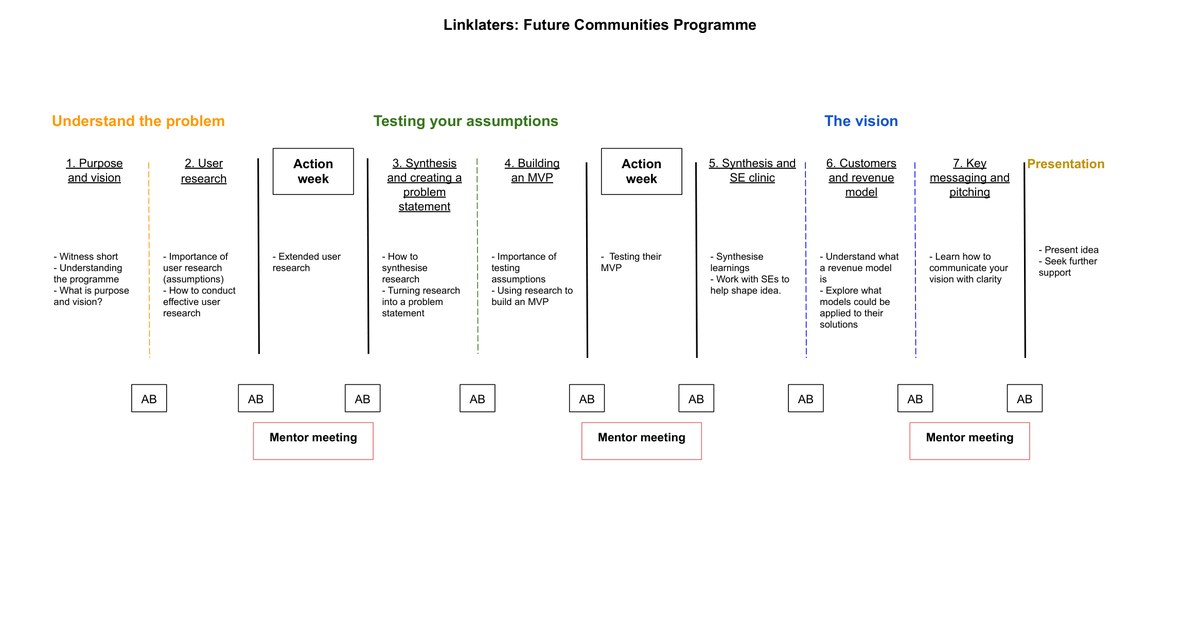
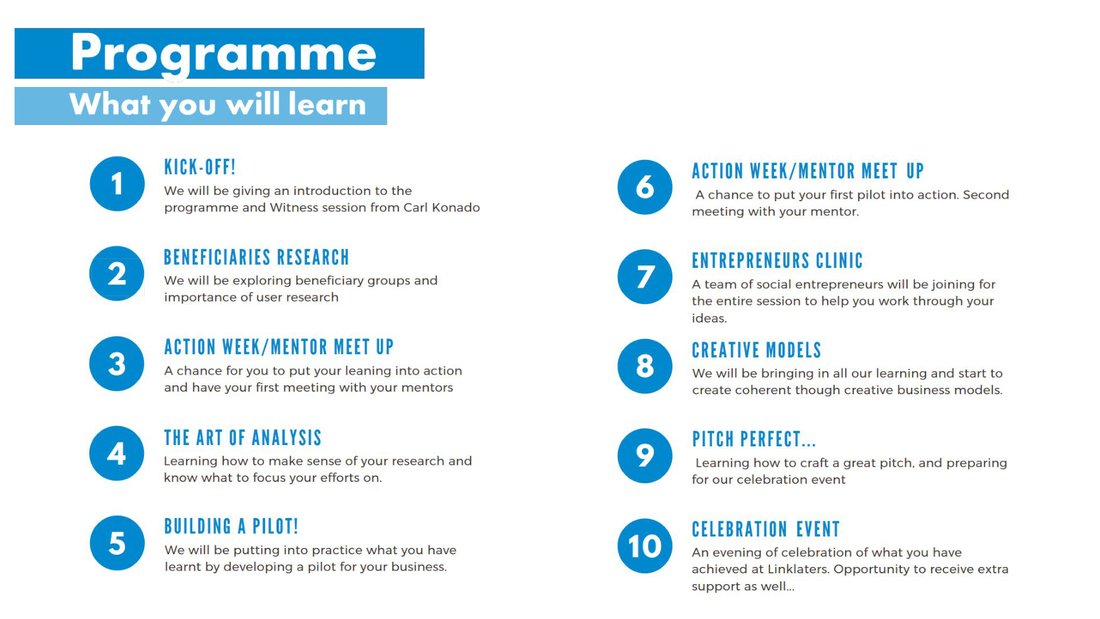
The Future Communities Programme, piloted with Linklaters in 2019: an intensive programme helping 20 entrepreneurs in Haringey start social enterprises for their own community. Ten weeks, seven evening workshops, 7 March to 9 May. The first SSE programme designed to run in the evenings, so people could take part without giving up a day’s work. No qualifications required, open to people from any background, and the only entry condition was that what you were starting had to be based in Haringey.
Structured as three phases rather than a course of topics. Understand the problem: purpose and vision, then beneficiary research. Test your assumptions: making sense of the research, then building a pilot. Then the vision: an entrepreneurs’ clinic where working social entrepreneurs joined for a whole session, business models, and pitching. Two action weeks sat between the taught sessions so people ran real research and put a first pilot into action on their own venture rather than in a workshop. Around that, three mentor meet-ups, a weekly action buddy, and a £500 grant each to spend on the project. It closed with a celebration and pitch evening hosted at Linklaters.
Evenings changed who could take part, which was the point of running it in one borough in the first place. The action weeks did the heavy lifting: the curriculum kept handing the work back to the venture rather than teaching about ventures. Those two parts are what had to survive being copied, and the model has since been replicated across SSE’s venture programmes nationally, which is the real test of whether a programme design works outside the room it was built in.
Drivers for Change
Mar to Jul 2018 · 100 entrepreneurs
Co-designing a venture programme across eight UK cities
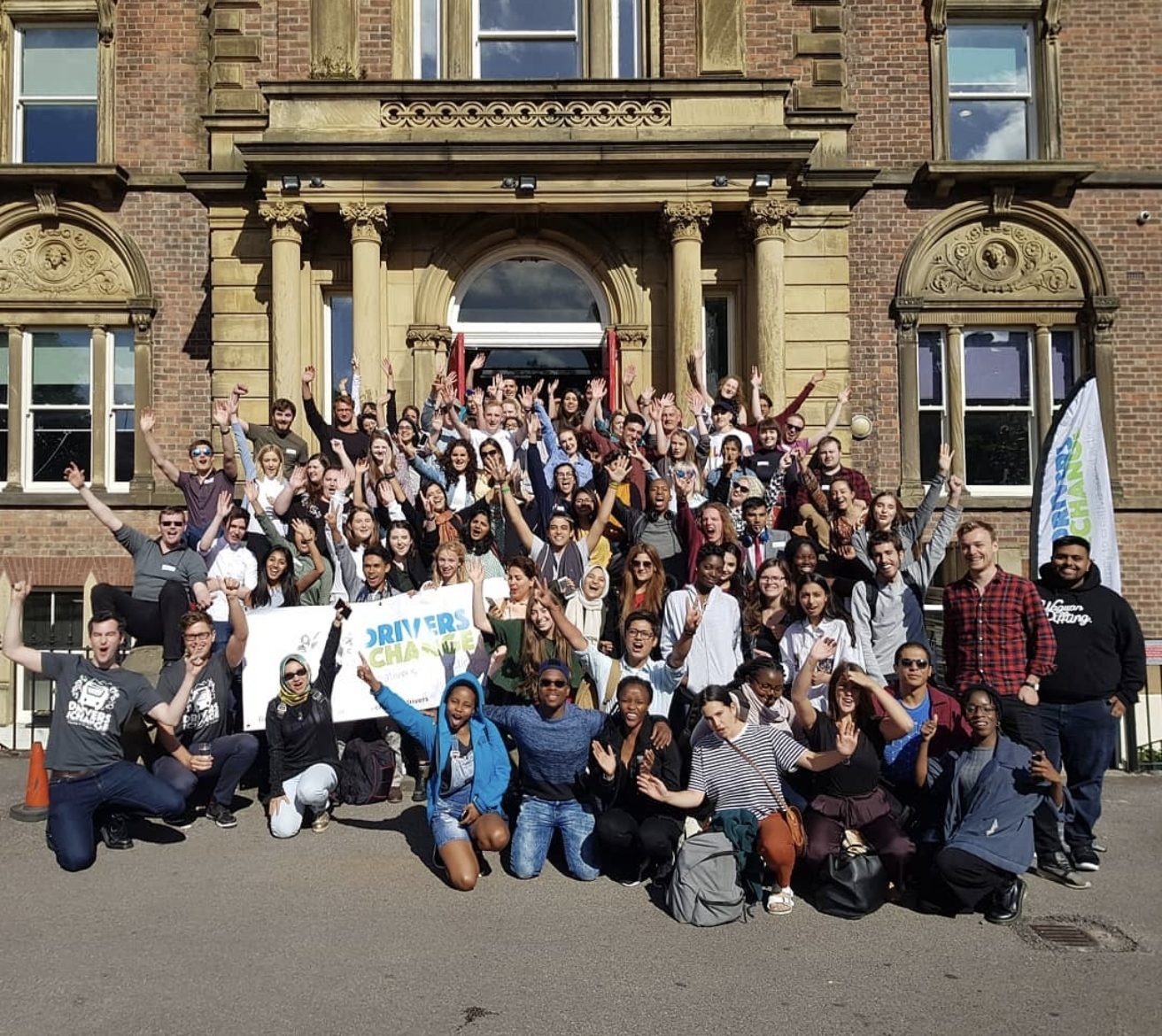
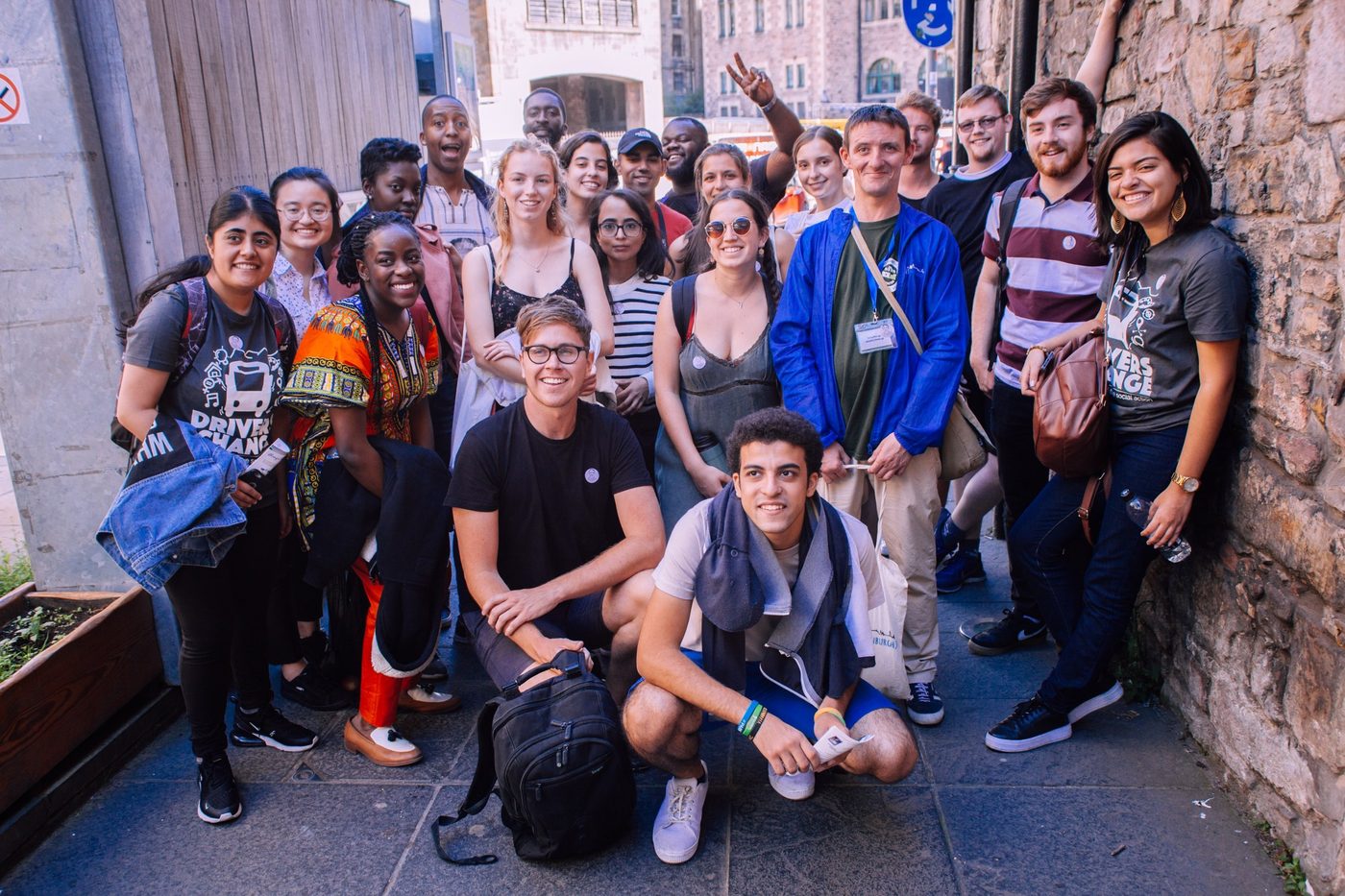
An eleven-day travelling programme for 100 young entrepreneurs aged 18 to 25, run in June 2018 and modelled on Jagriti Yatra in India. The cohort moved by bus through eight UK cities, Bradford, Bristol, Edinburgh and Liverpool among them, meeting entrepreneurs, activists, community organisers and artists building things where they live. Twenty places went to participants from Egypt, Brazil, Pakistan, Indonesia and South Africa through the British Council’s DICE programme. Speakers along the way included Gordon Brown and Michael Sheen, and it closed at the House of Lords with participants presenting their plans.
Co-designed the programme and helped lead its delivery, with PwC, the British Council and the Southbank Centre. The risk with a travelling programme is that it becomes an inspiring tour and little else: good speakers for a fortnight, then everyone goes home. So practical learning sat at the centre of the design. It taught the methods and skills for actually starting a venture rather than the motivation to try one, and every participant worked on their own social action or enterprise plan across the eleven days instead of leaving with a set of notes.
Running one curriculum across eight cities, for a cohort drawn from six countries, forces the decision about what can scale and what cannot. The methods stayed identical everywhere, because that is the part that gets better with every stop. The local partners, venues and examples changed at every stop, because they were what made it land, and standardising them would have killed it.