SERVICE DESIGN
Redesigning how a service actually runs.
Not just the interface. Who does what, on what evidence, and when. Designing a service from research through to the plan that lets someone else run it.
London Borough of Hounslow · Consultant
Aug to Oct 2017 · 8 weeks
Designing a community cafe the estate could run itself
The Hub on the Meadows Estate had a community cafe that was not working. The brief from the London Borough of Hounslow was to put the foundations in place for one that could sustain itself: affordable food, a reason for people to spend time there, employability routes for volunteers, and a way into the other services in the building. Delivered in a team of five on the Year Here programme.
Eight weeks, run as a double diamond. Visited four kinds of community cafe across London and interviewed the people who founded, staffed and used them, while spending Thursday mornings working in the Hub cafe itself. Then used two live events as prototypes rather than asking people what they wanted in the abstract: a menu of ideas that returned 18 responses with the prices residents would actually pay, and a bake-off that drew 25 people and tested whether there was demand for opening after school. A session with 13 people from the estate, the Hub, the council and Year Here set the priorities.
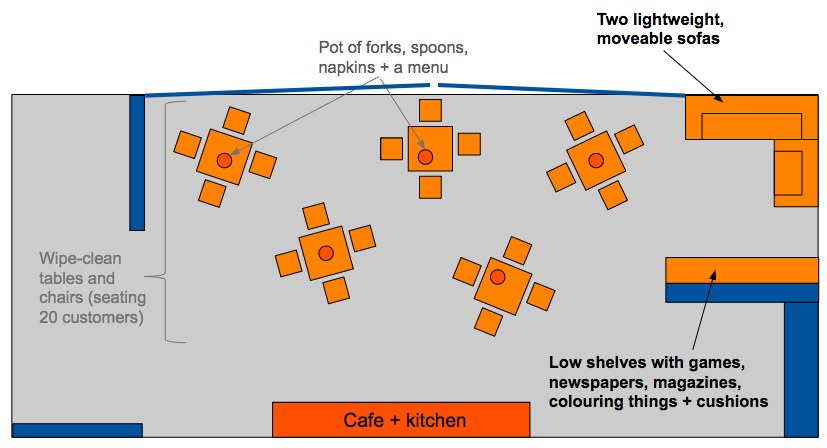
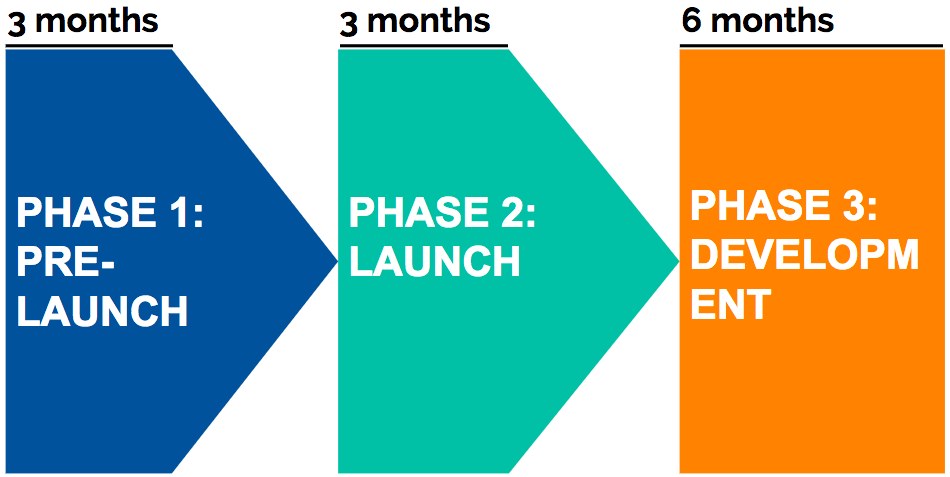
The output was the runnable thing, not a strategy. A staffing model of three part-time paid roles, a board drawn from the estate and two volunteers a shift, split front of house and back of house so someone is always responsible for whether a person feels welcome. A floor plan with moveable sofas and low shelves of books and games, because the room had to tell people they were not being rushed. A menu priced against a sustainable cover count. A recommended legal structure. A three-phase plan across the first year, with each phase owned by a named party.
The engagement events were the research. Asking residents to fill in a menu with their own prices produced sharper data than any survey would have, because it made people commit to a number. The harder finding was social: community activity on the estate ran through long-standing relationships and grudges, so a cafe run by any one group would have inherited its politics. That is why the recommendation put a cross-section of the community on the board rather than the most willing volunteers.